Article:
Creatine for women: why it is about more than muscle?
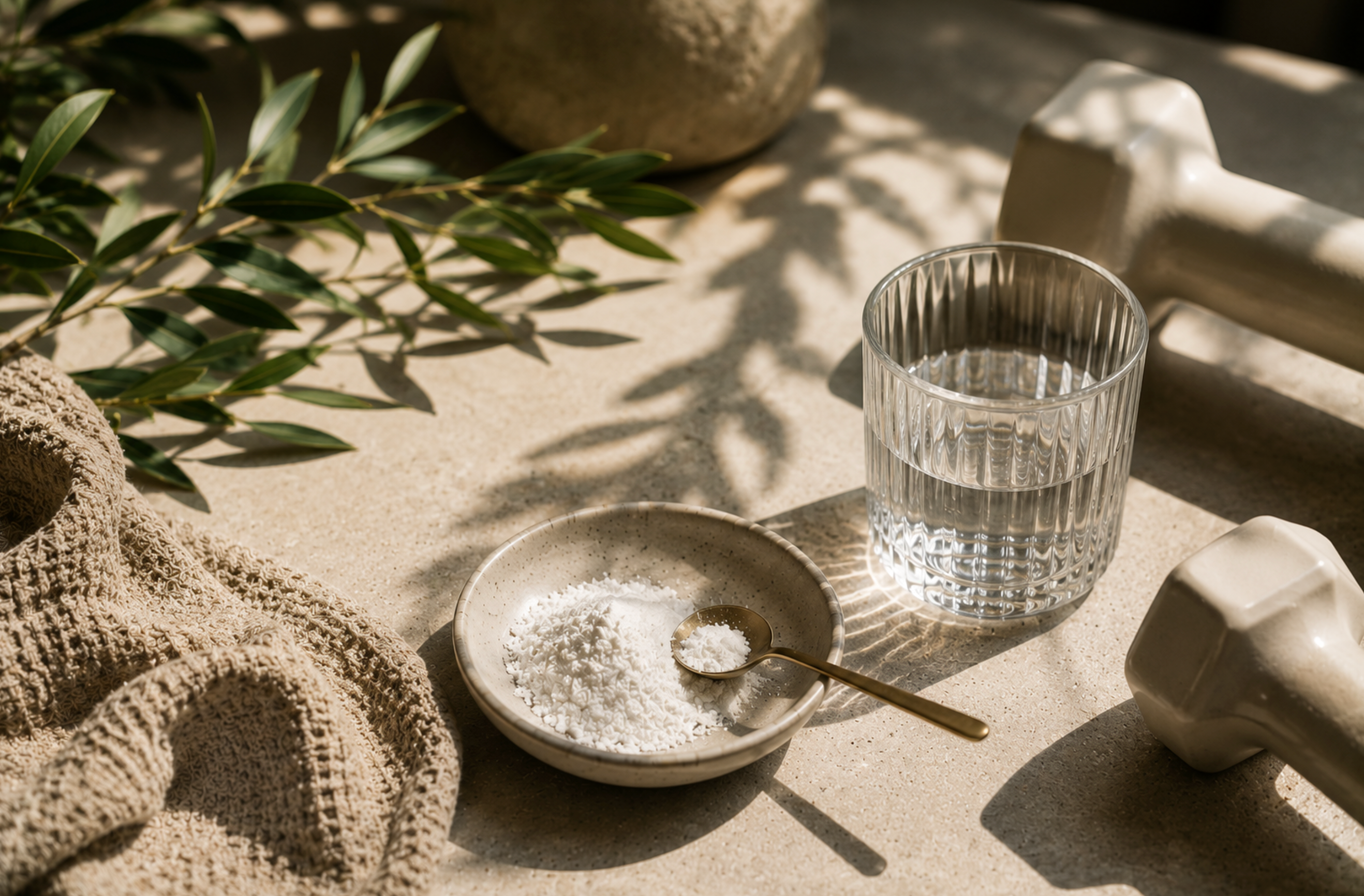
Creatine for women: why it is about more than muscle?
For years, creatine was marketed mainly to male athletes and bodybuilders. Today, it is becoming increasingly relevant to women interested in strength, energy, cognition and healthy ageing.
This shift reflects a wider change in how we understand women’s health. Muscle is no longer viewed only through appearance or sport. It is now recognised as an important part of metabolic health, mobility, resilience and long-term independence.
Creatine fits into this conversation because it plays a key role in the body’s rapid energy system. It is stored mainly in muscle, but it is also present in the brain and other tissues with high energy demands.
What is creatine?
Creatine is a naturally occurring compound made from amino acids. The body produces it, and smaller amounts also come from foods such as meat and fish.
Most creatine is stored in skeletal muscle as creatine and phosphocreatine. Phosphocreatine helps regenerate ATP, the main energy currency used by cells.
This is why creatine is so widely used in sports nutrition. It helps support short bursts of high-intensity exercise and training performance.
However, its role in energy metabolism is also why researchers are studying creatine beyond sport.
Why creatine matters for women
Women naturally produce and store creatine, but intake and storage can vary depending on diet, muscle mass and life stage.
Women who eat little or no meat and fish may obtain less creatine from food. Researchers are also exploring how creatine metabolism may interact with hormonal changes across the menstrual cycle, pregnancy, postpartum life and menopause.
There is no separate form of “creatine for women.” Creatine monohydrate remains the most researched form for both women and men.
The difference is usually the goal. Some women use creatine for training performance, while others are more interested in maintaining strength, supporting an active lifestyle or protecting physical capacity with age.
Muscle and healthy ageing
Muscle is not only about appearance. It plays an important role in movement, glucose handling, balance and physical independence.
From midlife onward, maintaining muscle becomes increasingly important. Ageing, inactivity, hormonal changes and insufficient protein intake can all make muscle harder to preserve.
Resistance training remains the foundation. Creatine does not replace exercise, but it is one of the most researched supplements used alongside strength training.
L Cell Creatine Monohydrate fits into this approach because it offers a simple, focused form of a compound with a strong research history in exercise performance and muscle-related outcomes.
Creatine during menopause
Perimenopause and menopause can affect energy, body composition, muscle strength, sleep and recovery.
Creatine should not be presented as a treatment for menopausal symptoms. However, it may be especially relevant during this stage because muscle preservation and physical resilience become more important.
Research suggests that the clearest potential benefits appear when creatine is combined with regular resistance training.
This is why creatine works best as part of a wider routine that includes strength training, adequate protein, sleep and consistent movement.
Creatine and the brain
The brain also has high energy demands, which is why researchers are studying creatine in relation to memory, attention, processing speed and mental fatigue.
Some recent reviews suggest possible cognitive benefits in certain groups, but the evidence is not yet consistent enough to describe creatine as a proven brain supplement for everyone.
The strongest scientific position is still its role in muscular energy metabolism, while research into cognition and brain energy remains promising but developing.
How much creatine is usually used?
A common daily amount is 3–5 grams of creatine monohydrate.
A loading phase is not necessary. Taking a consistent daily amount can gradually increase muscle creatine stores.
Timing is less important than consistency, so creatine can be taken whenever it fits your routine best.
The European Union has an authorised health claim stating that creatine increases physical performance in successive bursts of short-term, high-intensity exercise when 3 grams are consumed daily.
Why L Cell?
At L Cell, we do not believe women’s longevity should be reduced to beauty or weight.
Healthy ageing also means maintaining strength, movement, metabolic capacity and independence.
L Cell Creatine Monohydrate is created for women who want a simple, science-led ingredient with a clear place in a strength and longevity routine.
The goal is not to present creatine as a miracle product. It is to understand why an ingredient once associated mainly with bodybuilding now belongs in a broader conversation about women’s health and healthy ageing.
This product is a food supplement. Food supplements should not be used as a substitute for a varied, balanced diet and a healthy lifestyle. This article is for educational purposes only and is not medical advice.
Scientific sources
Smith-Ryan AE et al. (2021). Creatine Supplementation in Women’s Health: A Lifespan Perspective. Nutrients.
Smith-Ryan AE et al. (2025). Creatine in women’s health: bridging the gap from menstrual cycle through pregnancy and menopause. Journal of the International Society of Sports Nutrition.
Xu C et al. (2024). The effects of creatine supplementation on cognitive function in adults: a systematic review and meta-analysis. Frontiers in Nutrition.
Candow DG et al. (2025). Creatine monohydrate supplementation for older adults and clinical populations. Journal of the International Society of Sports Nutrition.
European Commission Regulation (EU) No 432/2012. Creatine increases physical performance in successive bursts of short-term, high-intensity exercise.
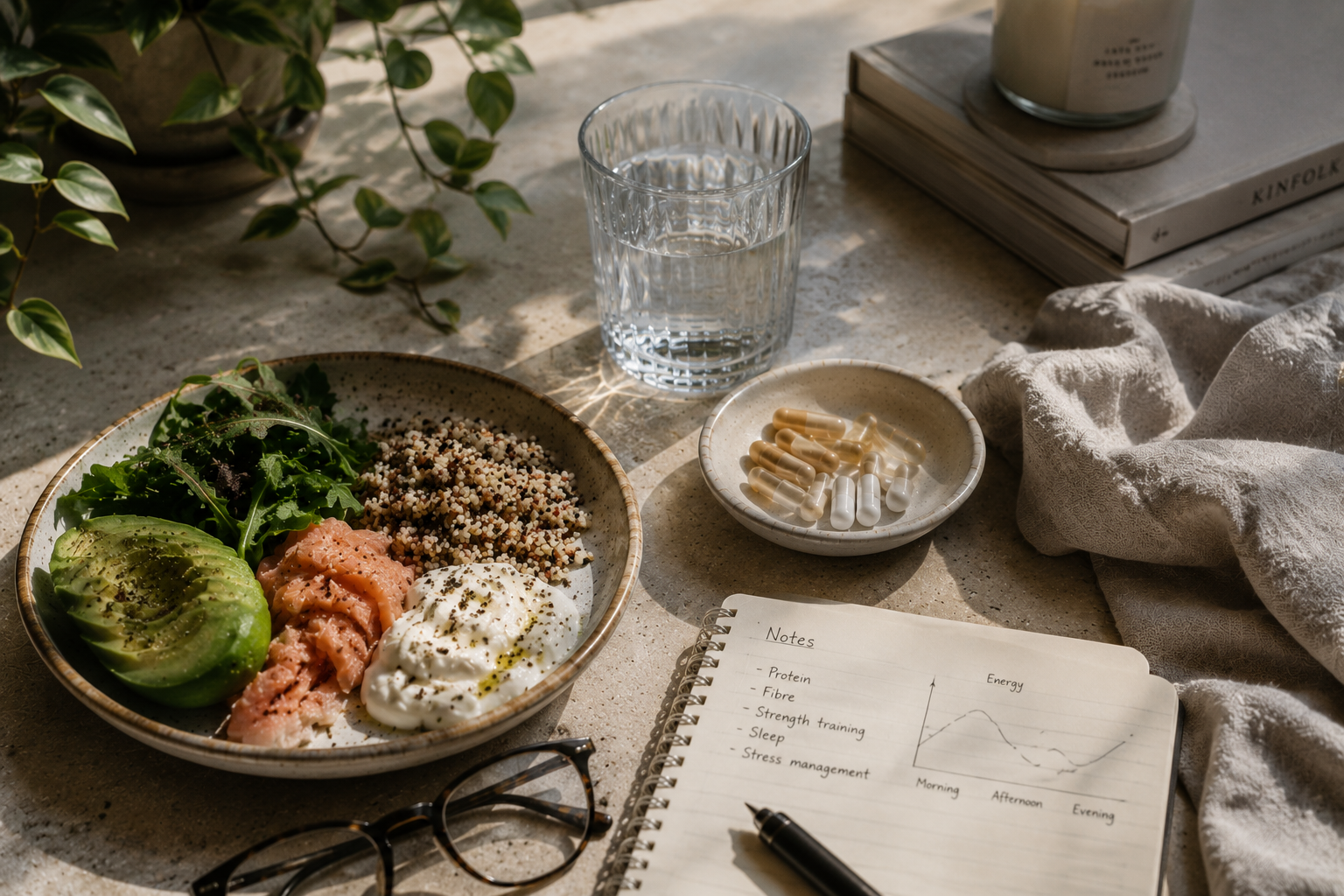
Blood sugar, cravings and ageing: why metabolic stability matters for longevity?
Most people think about blood sugar only when something is wrong, but blood sugar is also part of everyday energy, appetite, focus and long-term metabolic health.
Every meal sends information to th...
Read more
Three new L Cell formulas: energy, NAD+ and the biology of healthy ageing
How we feel every day, and how the body ages over time, depends on many connected processes: cellular energy, NAD+ metabolism, methylation, oxidative stress, nervous system function, immune balance...
Read more
<div class="dynamic-checkout__content" id="dynamic-checkout-cart" data-shopify="dynamic-checkout-cart"> <shopify-accelerated-checkout-cart wallet-configs="[{"supports_subs":true,"supports_def_opts":false,"name":"shop_pay","wallet_params":{"shopId":73057599754,"merchantName":"L Cell","personalized":true}},{"supports_subs":true,"supports_def_opts":false,"name":"paypal","wallet_params":{"shopId":73057599754,"countryCode":"LT","merchantName":"L Cell","phoneRequired":true,"companyRequired":false,"shippingType":"shipping","shopifyPaymentsEnabled":true,"hasManagedSellingPlanState":false,"requiresBillingAgreement":false,"gatewayType":"CONNECTED","merchantId":"7N3C3TYAXNTK4","sdkUrl":"https://www.paypal.com/sdk/js?components=buttons\u0026commit=false\u0026currency=GBP\u0026locale=en_US\u0026client-id=AexZEtAxk09Ncgj6FSWFFyGKbxxAZ_LTyJ2DPdJWl1YUlecinmc5AfIaRF2qYjWlusWahlzz6SVkY5Ci\u0026merchant-id=7N3C3TYAXNTK4\u0026intent=authorize","serviceableCountryCodes":["AC","AD","AE","AF","AG","AI","AL","AM","AO","AR","AT","AU","AW","AX","AZ","BA","BB","BD","BE","BF","BG","BH","BI","BJ","BL","BM","BN","BO","BQ","BR","BS","BT","BW","BY","BZ","CA","CC","CD","CF","CG","CH","CI","CK","CL","CM","CN","CO","CR","CV","CW","CX","CY","CZ","DE","DJ","DK","DM","DO","DZ","EC","EE","EG","EH","ER","ES","ET","FI","FJ","FK","FO","FR","GA","GB","GD","GE","GF","GG","GH","GI","GL","GM","GN","GP","GQ","GR","GS","GT","GW","GY","HK","HN","HR","HT","HU","ID","IE","IL","IM","IN","IO","IQ","IS","IT","JE","JM","JO","JP","KE","KG","KH","KI","KM","KN","KR","KW","KY","KZ","LA","LB","LC","LI","LK","LR","LS","LT","LU","LV","LY","MA","MC","MD","ME","MF","MG","MK","ML","MM","MN","MO","MQ","MR","MS","MT","MU","MV","MW","MX","MZ","NA","NC","NE","NF","NG","NI","NL","NO","NP","NR","NU","NZ","OM","PA","PE","PF","PG","PH","PK","PL","PM","PN","PS","PT","PY","QA","RE","RO","RS","RW","SA","SB","SC","SD","SE","SG","SH","SI","SJ","SK","SL","SM","SN","SO","SR","SS","ST","SV","SX","SZ","TA","TC","TD","TF","TG","TH","TJ","TK","TL","TM","TN","TO","TR","TT","TV","TW","TZ","UA","UG","UM","US","UY","UZ","VA","VC","VE","VG","VN","VU","WF","WS","XK","YE","YT","ZA","ZM","ZW"]}}]" access-token="f4115d6e76a0ecff9d111ccebb391403" buyer-country="GB" buyer-locale="en" buyer-currency="GBP" shop-id="73057599754" cart-id="d0ce1938a73dfca5e96a18063def51cb" enabled-flags="["a1d1f9a1","f5afabb3","370070f3","b311f899"]" > <div class="wallet-button-wrapper"> <ul class='wallet-cart-grid wallet-cart-grid--skeleton' role="list" data-shopify-buttoncontainer="true"> <li data-testid='grid-cell' class='wallet-cart-button-container'><div class='wallet-cart-button wallet-cart-button__skeleton' role='button' disabled aria-hidden='true'> </div></li><li data-testid='grid-cell' class='wallet-cart-button-container'><div class='wallet-cart-button wallet-cart-button__skeleton' role='button' disabled aria-hidden='true'> </div></li> </ul> </div> </shopify-accelerated-checkout-cart> </div>



Leave a comment
This site is protected by hCaptcha and the hCaptcha Privacy Policy and Terms of Service apply.